01
Leadership & Teamwork
Participants explored different approaches to leadership and reflected on the qualities required to guide teams, motivate young people and create environments based on trust and shared responsibility.

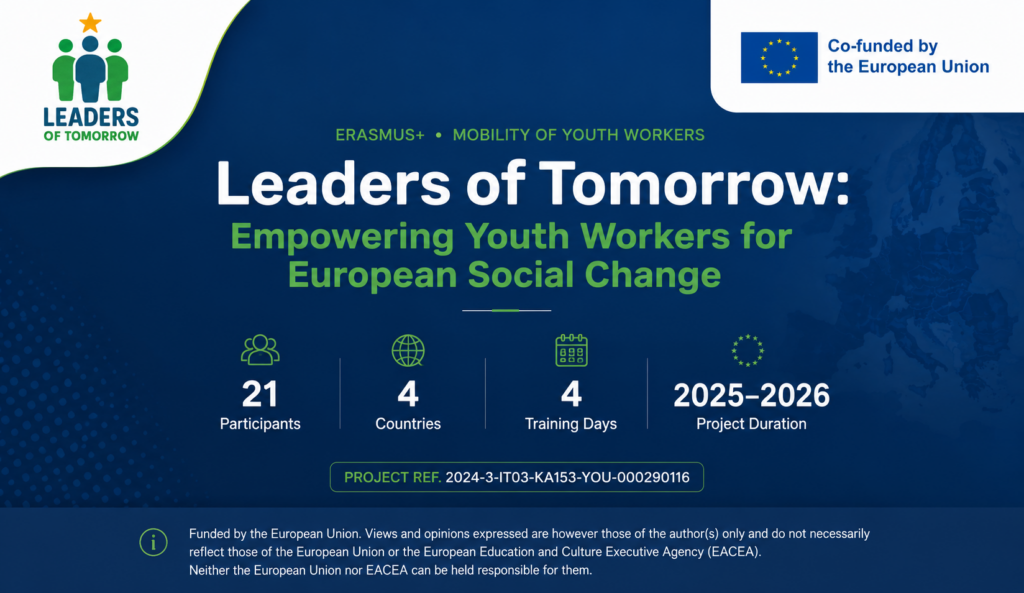
Leaders of Tomorrow: Empowering Youth Workers for European Social Change is an Erasmus+ project designed to strengthen the skills, confidence and professional capacity of youth workers across Europe.
The project brings together youth workers from Italy, Spain, Greece and Malta in a shared European learning experience focused on leadership, project management, inclusion, intercultural learning and active participation.
Through non-formal education, international cooperation and learning-by-doing, participants develop practical tools that can be transferred to their organisations and to their daily work with young people.
The heart of Leaders of Tomorrow was an intensive international Bootcamp bringing together youth workers and young professionals from Italy, Spain, Greece and Malta.
For four working days, participants learned, discussed, experimented and worked together on the challenges faced by youth workers in contemporary Europe.
Rather than relying on traditional classroom-based training, the Bootcamp was built around non-formal education, peer learning and learning by doing. Participants became active contributors to the learning process, sharing their professional experiences and transforming them into practical tools and new project ideas.
The programme connected personal experience, professional development and European cooperation through a sequence of participatory activities.
Participants explored different approaches to leadership and reflected on the qualities required to guide teams, motivate young people and create environments based on trust and shared responsibility.
Working in an international group allowed participants to explore cultural awareness, empathy, active listening, stereotypes and communication across different social and cultural backgrounds.
Participants worked on how to identify real community needs and design activities in which accessibility, equity and meaningful participation are considered from the very beginning.
The learning process moved from theory to practice. Working in small international teams, participants transformed identified needs into concrete project concepts addressing young people with fewer opportunities.
One of the key moments of the Bootcamp was the Project Lab. Participants were divided into international teams and challenged to design practical, inclusive projects responding to the needs of different groups of young people with fewer opportunities.
Using a simplified Business Model Canvas, each team identified a target group, its needs, the value proposition of the project, possible activities, partners, resources, communication channels, funding opportunities and expected impact.
The exercise combined the knowledge acquired during the Bootcamp with participants' own personal and professional experiences, turning the training into concrete ideas for social change.
Accessible integration pathways for young migrants and refugees with visual impairments.
Skills, storytelling and reintegration opportunities for NEET young people with justice backgrounds.
Leadership and digital opportunities for girls and young women living in rural areas.
Leadership, wellbeing and participation for transgender and non-binary young people.
The learning experience also moved into the institutional and European spaces of Rome, connecting the work developed during the Bootcamp with active citizenship and the European dimension of youth work.
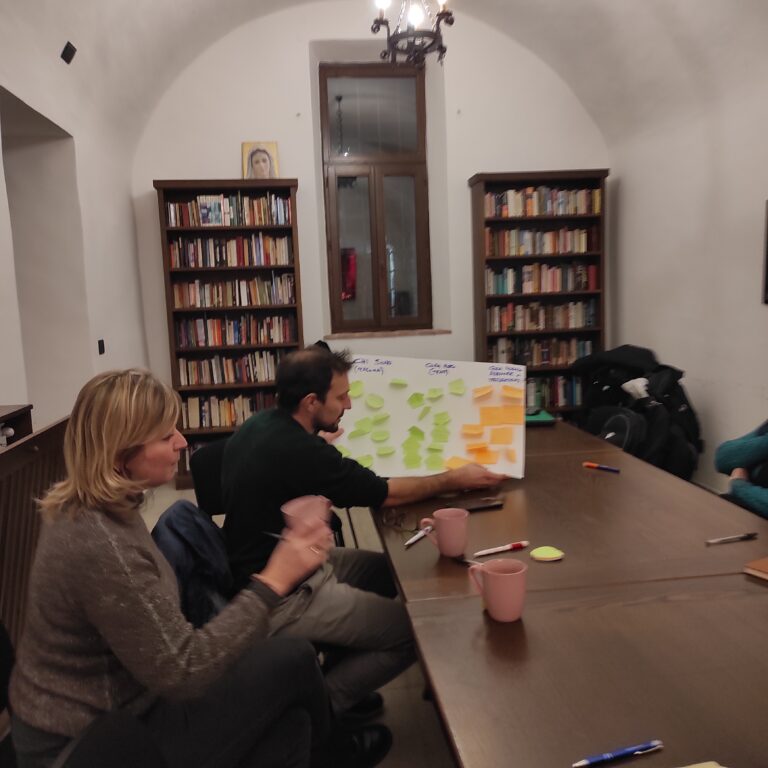
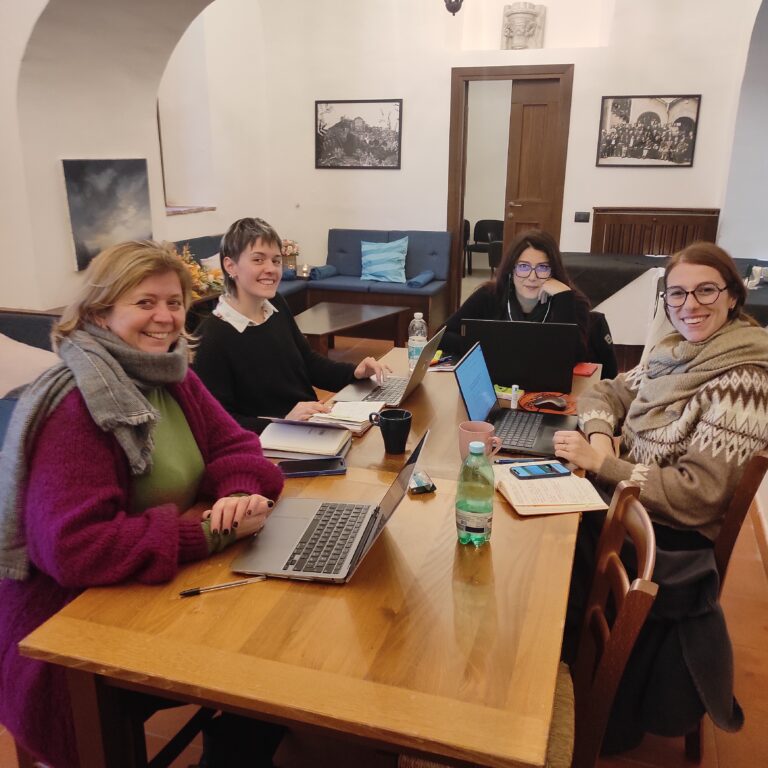
Real moments from the Leaders of Tomorrow Bootcamp in Rome: international group work, training sessions, discussions and collaborative activities carried out during the mobility.
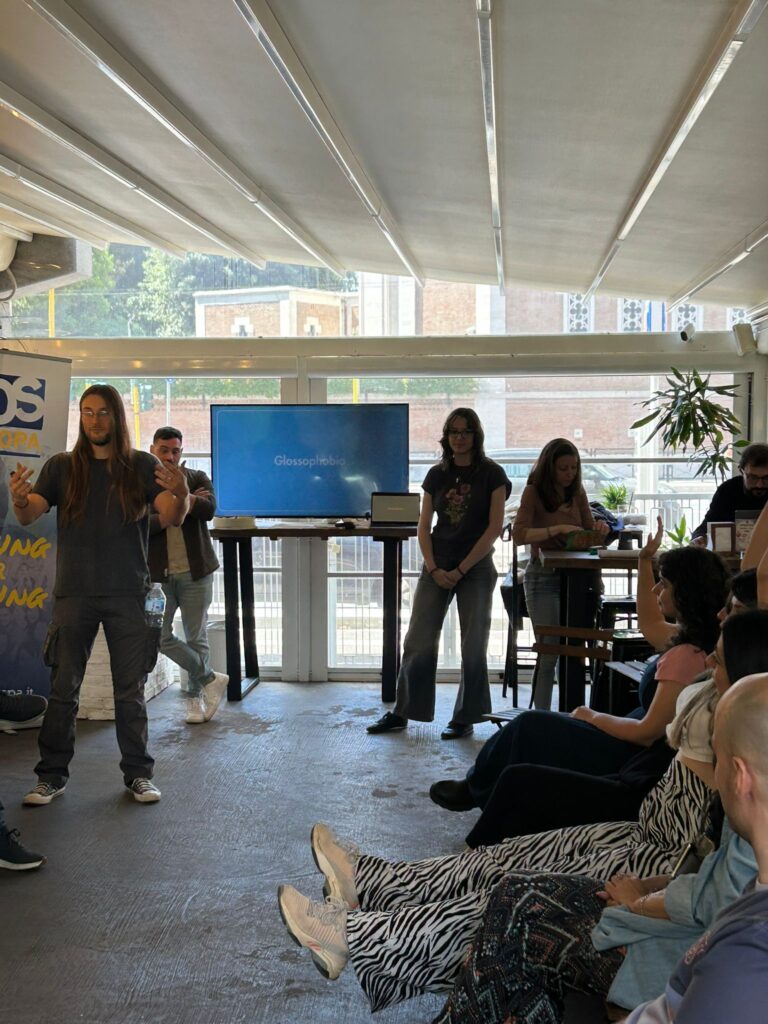
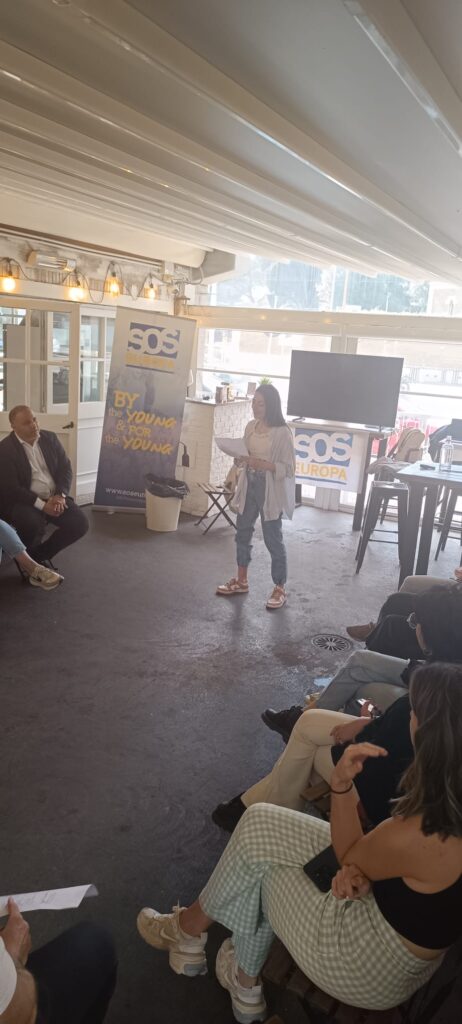
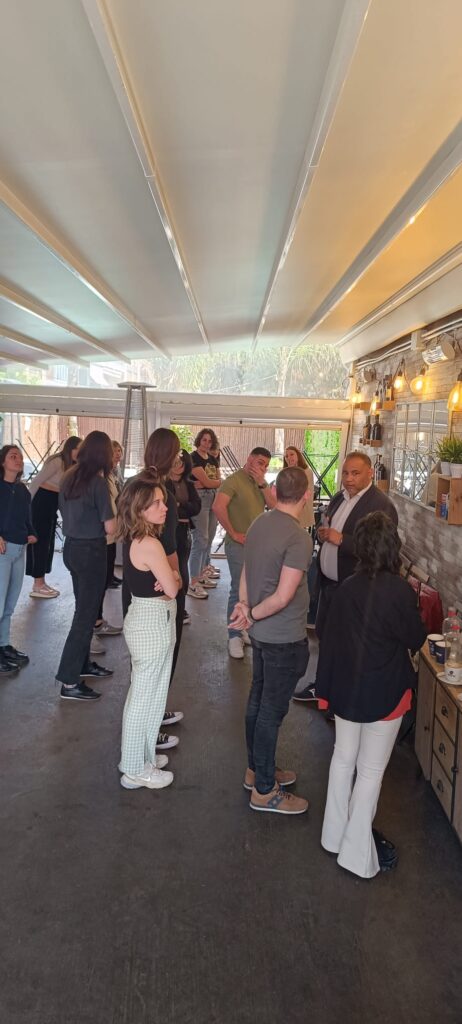
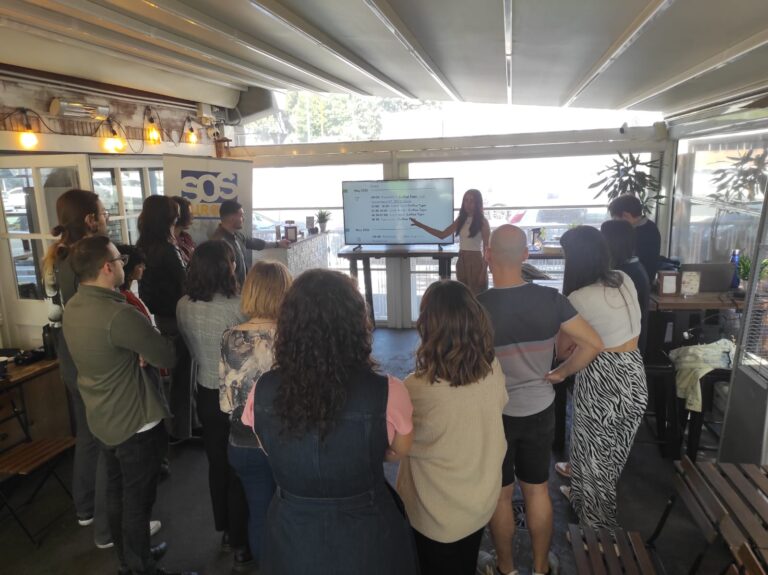

The Bootcamp learning process was supported by Youthpass, helping participants identify, reflect on and communicate the competences developed through their international non-formal learning experience.
Participants returned to their organisations with new competences, practical methodologies, project ideas and European connections that can be transferred to their everyday work with young people.
Explore the learning resources and practical outputs developed and used during the Leaders of Tomorrow Bootcamp in Rome.
These materials translate the learning experience into practical tools that youth workers, organisations and young professionals can use, adapt and share in their own communities.
A practical learning resource designed to support youth workers in moving from the identification of real needs to the development of inclusive and meaningful projects.
The material explores participation, accessibility, equity, non-formal education and needs-based project planning, providing concepts and approaches that can be transferred to youth work activities.
Download PDF ↓Discover the project concepts created by participants during one of the core hands-on activities of the Rome Bootcamp.
Working in international teams and using a simplified Business Model Canvas, participants transformed real social needs into inclusive project ideas addressing different groups of young people with fewer opportunities.
The experience developed in Rome does not end with the Bootcamp. Sharing tools, methodologies and project ideas allows the learning to travel further and supports other youth workers in creating positive change across Europe.
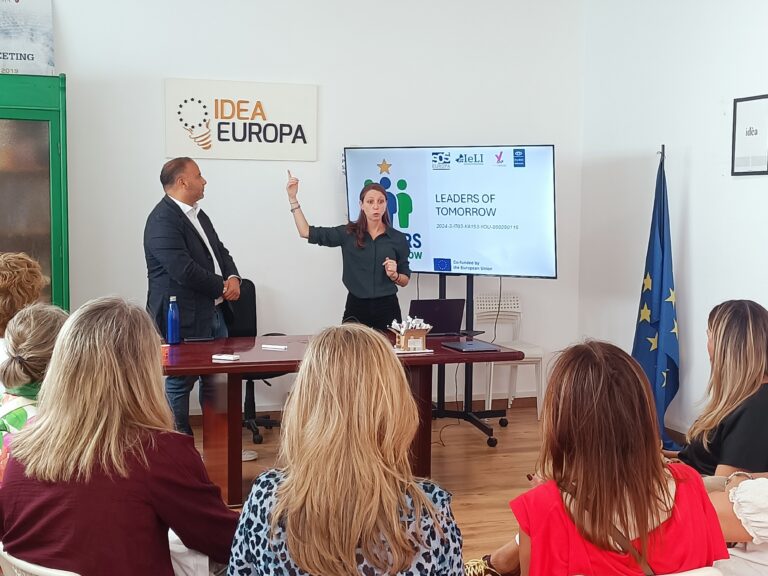
On September 10, 2025, SOS Europa hosted a dissemination and networking event in Rome within the framework of Leaders of Tomorrow: Empowering Youth Workers for European Social Change.
The meeting brought together youth workers, volunteers and local stakeholders to share the progress achieved through the project, reflect on the experience of the Rome Bootcamp and explore how its methodologies and results can continue to generate impact beyond the mobility itself.
The event was not simply about presenting what had already been achieved. It created a space for dialogue, exchange and future cooperation, connecting the experience developed within the project with youth workers and stakeholders operating at local and European level.
The meeting provided an opportunity to reconnect the training experience in Rome with the wider objectives of the project and to discuss how its approaches can strengthen everyday youth work.
Participants and stakeholders reflected on the Leadership Bootcamp, the activities implemented and the learning generated through the international mobility experience.
The discussion explored how inclusive approaches, digital tools and participatory methodologies can support more accessible and effective youth work.
Local youth workers were encouraged to integrate non-formal education tools, peer learning and learning-by-doing approaches into their activities with young people.
The event also became a space for networking and for exploring new opportunities for Erasmus+ cooperation, partnerships and future initiatives.
A particularly meaningful part of the event was the participation of Isabel Atienza, President of Asociación Euro Mirada, who was visiting Rome.
Her presence reinforced the transnational dimension of Leaders of Tomorrow and represented the strong cooperation developed between the Italian and Spanish partner organisations.
During her contribution, she highlighted the importance of youth leadership, social inclusion, active citizenship and intercultural dialogue in addressing common European challenges.
The exchange demonstrated how cooperation between organisations from different countries can improve the quality, reach and sustainability of youth work initiatives.
Hosting the event at the operational heart of SOS Europa reinforced the organisation's commitment to connecting the European dimension of the project with local youth work.
Participants engaged in open discussions and practical exchanges of experience, strengthening the idea that leadership develops through cooperation, reflection and active participation.
The meeting therefore became both a dissemination milestone and a strategic opportunity to consolidate partnerships, engage local actors and inspire new European initiatives.
Through dialogue, collaboration and shared values, Leaders of Tomorrow continues to translate European priorities into concrete local action — building bridges between communities and empowering a new generation of youth leaders.
The journey of Leaders of Tomorrow continued in Tolfa, where the project returned to the local community through a new dissemination, follow-up and networking event.
The meeting brought together 13 youth workers, volunteers, educators and local stakeholders interested in discovering the results of the international training pathway and exploring how its methodologies can be transferred into everyday youth work.
Youth workers · Volunteers · Educators · Local stakeholders
The Tolfa event was part of the project's follow-up and mentorship phase: a crucial step designed to ensure that the learning developed during the international experience could travel beyond the participants themselves.
Following the Leadership Bootcamp in Rome and the project's training activities on inclusion and digital innovation, participants were encouraged to transfer competences, methodologies and European perspectives into their own organisations and communities.
Tolfa therefore became a local space for sharing the experience, discussing current challenges in youth work and connecting the European dimension of the project with actors working directly on the territory.
Real moments from the local dissemination event: exchanging experiences, presenting project results and discussing how the Leaders of Tomorrow approach can continue to generate value for youth workers and communities.
The meeting focused on transferring the knowledge and experience developed through Leaders of Tomorrow to a wider group of local youth actors.
The event presented the competences developed through the project in leadership, teamwork and project management and discussed their practical application in youth organisations.
Particular attention was dedicated to working with young people with fewer opportunities and to designing activities capable of removing barriers to meaningful participation.
Participants explored the non-formal education methodologies tested throughout the project and reflected on how they can be adapted to different local youth work contexts.
The meeting highlighted the role of Youthpass in supporting reflection on learning and in recognising competences developed through international non-formal education experiences.
Participants discussed future perspectives for international cooperation and the importance of maintaining sustainable connections among youth organisations and local actors.
Participants were not passive recipients of project results. They became part of an open discussion on the current challenges facing youth work.
Particular attention was paid to the inclusion of young people with fewer opportunities — one of the central priorities of Leaders of Tomorrow.
Through dialogue and the exchange of practices and experiences, participants reflected on how youth organisations can become more inclusive, participatory and responsive to the needs of their communities.
Leadership in youth work is not simply a formal role. It is a shared responsibility: to inspire, facilitate participation and create the conditions for positive social change.
The experience developed through Erasmus+ and the international partnership provides new perspectives, methods and connections.
Dissemination allows those European experiences to return to local communities and become practical resources for youth workers and organisations.
With 13 active participants, the Tolfa meeting demonstrated that meaningful dissemination is not measured only by numbers, but by the quality of connections and the capacity to activate new processes.
The event strengthened local networks, encouraged the exchange of good practices and created new perspectives for cooperation, helping to ensure that the project's impact continues beyond its international mobility.
In this way, dissemination became a concrete part of the project's sustainability strategy: knowledge was shared, relationships were strengthened and participants were empowered to continue acting as multipliers within their communities.
From an international Bootcamp in Rome to a local community in Tolfa, Leaders of Tomorrow continues to turn learning into action, connections into cooperation and youth workers into multipliers of positive change.
Three digital learning resources created to extend the Leaders of Tomorrow experience beyond face-to-face activities.
From leadership development to international teamwork and the role of youth workers as change makers, the video pathway explores key competences for professionals working with young people in increasingly diverse, interconnected and European environments.
Explore leadership as a competence that can be developed, practised and transformed into action.
This digital learning resource extends the educational pathway of Leaders of Tomorrow and supports youth workers in reflecting on leadership within organisations, projects and communities.
International cooperation requires more than speaking the same language. It means learning how to communicate, collaborate and build trust across cultures.
This video focuses on working effectively within international teams — an essential competence for youth workers involved in Erasmus+, European projects and transnational cooperation.
The resource encourages reflection on communication, cultural diversity, teamwork and the human dimension behind successful international partnerships.
Youth work can create change when knowledge, participation and responsibility are transformed into concrete action.
This video explores the role of youth workers as change makers: professionals and community actors able to inspire participation, empower young people and contribute to positive social transformation.
It connects directly with the vision behind Leaders of Tomorrow: leadership is not only about leading others, but about enabling people and communities to become part of change.
The three resources can be explored as a learning pathway moving from personal competences to international cooperation and finally to social impact.
Develop awareness of leadership and your role as a youth worker.
Collaborate across cultures and build stronger international teams.
Turn competences and cooperation into positive social transformation.
These digital resources extend the impact of the project beyond its physical activities, making learning available to youth workers, organisations and communities across Europe.
Why do some leaders inspire people to act? A powerful exploration of purpose, motivation and the importance of starting with “why”.
Leadership is not reserved for extraordinary people. Sometimes a small action can change another person's life without us even realising it.
A landmark reflection on stereotypes, identity and why understanding multiple perspectives matters when working across cultures and communities.
Communication is one of a leader's most important tools. Explore how authenticity, empathy and conscious speaking can create stronger connections.
Before designing solutions for people, listen to them. A provocative lesson about participation, empowerment and community-led change.
Explore the Leaders of Tomorrow Training Toolkit, a practical learning resource developed within the project “Leaders of Tomorrow: Empowering Youth Workers for European Social Change”.
A resource for youth workers, educators and organisations interested in strengthening leadership competences, inclusive approaches, innovation and positive social change.
Download the complete Leaders of Tomorrow Training Toolkit in PDF format and use it as a learning and reference resource in your youth work activities.
Approximately 10–15 minutes per module
You have completed the Leaders of Tomorrow micro-learning journey and explored six essential dimensions of contemporary youth leadership.
Lead. Include. Connect. Create Change.

All 21 participants of the Leadership BootCamp in Rome received their Youthpass certificate, recognising and making visible the competences developed through non-formal and informal learning during the Erasmus+ mobility experience.